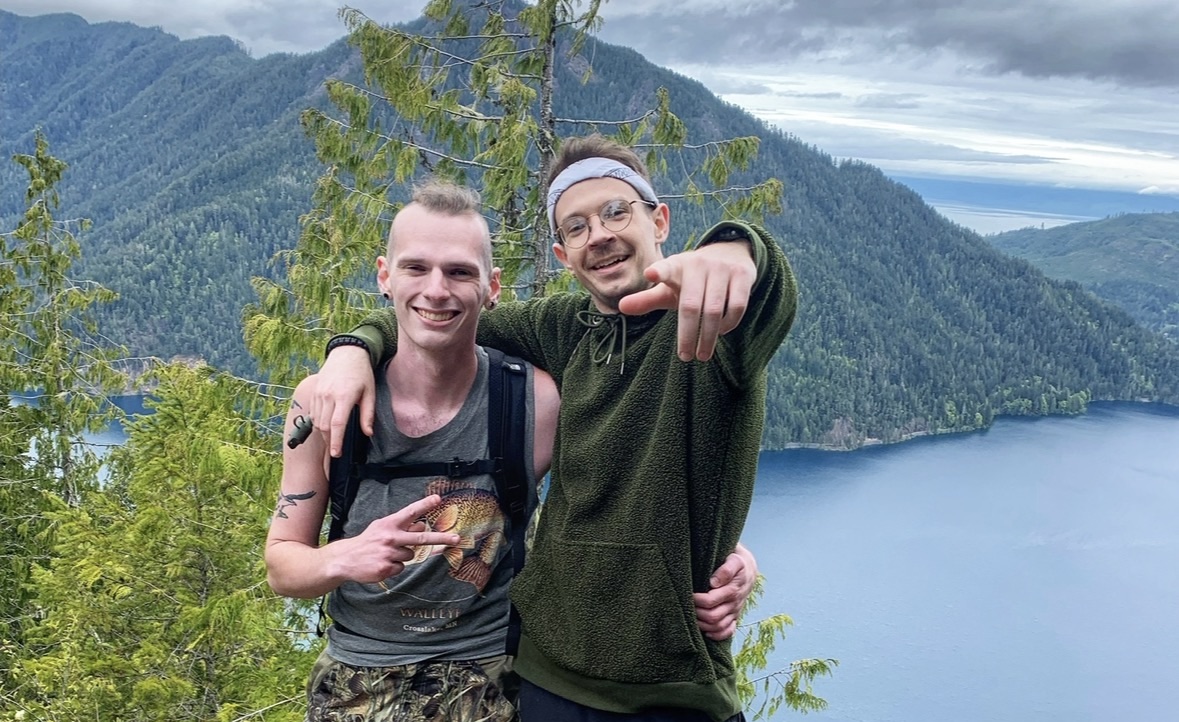
Interview with Jack Bennett and Kameron Terrell of Ecology Amateurs
There’s this nature blog I’ve been seeing around social media in the past year called Ecology Amateurs. The web blog has clean, colorful “field sheets” and interactive activities on anything from native plants to herps (amphibians and reptiles) to our favorite, birds. As an environmental interpreter by trade myself, I think the idea of putting this information online and social media in a simple, low-key format with the voice of a neighbor or friend is something really attractive to our current landscape. I’ll touch back on that later, but first let’s jump into my interview with Jack and Kam.
Introducing the Ecology Amateurs
BACI: I’d love for you to tell our readers what the idea behind the name is, and your mission statement of “no PhD required?”
Jack: When we decided to start the project by posting our photography on social media, Ecology Amateurs was the name that just felt right. We aren’t experts, and we want to make it clear that ecology and science are for everyone. Everyone should be able to enjoy and contribute to science, regardless of where they’re coming from.
BACI: You are both originally from Central Indiana, correct?
Kam: Yes, we are both from Central Indiana. Jack’s been in the Indy area since day one, and I was a military kid born in the Indy area and moved around throughout my younger days. I spent the first few years of my childhood and then again in my adulthood in the greater Indy area before moving away.
BACI: Jack, you work at Pecar Park Nature Center in Avon, so our readers can come say hi to you. What is your job there?
Jack: I’m a Naturalist there, doing everything from caring for our menagerie of exotic animals to giving presentations for field trips. It’s a small park, but the birding is good, especially during migration, so come check us out!
Where do you live now, Kam, and what do you do?
Kam: Currently, I’m at Washington State University, taking a break from the Zoological field and pursuing a degree in Wildlife Ecology. While here, I’m working on [the] behavioral husbandry of brown bears and disease ecology of amphibians.
From “Amateurs” to Nature Teachers
BACI: Were you always interested in more serious nature study or was something else a gateway into that?
Jack: I’ve always had a strong hyper-fixation [on] the life sciences, but it wasn’t until a career change and the formation of Ecology Amateurs that this all became something that my life truly revolves around.
Kam: I’ve had a lifelong fascination with the natural world. As a child, my first aspiration was to become a marine biologist. However, along the way, I got sidetracked by the hustle and bustle of life, and it wasn’t until my mid-20s that I returned to my passion. When Jack and I started Ecology Amateurs, it stemmed from my desire to educate others and share my love for the animals and environments I cherished.
BACI: So now you are both currently professionals in the environmental field. How did you get there? It’s not easy.
Jack: I started out in the veterinary field as a Registered Vet Tech (RVT), a difficult job but one that provided a variety of experiences and introduced me to many people, including Kam. When I was in need of a major change, a connection made through my career helped me make the switch to being a part of the naturalist community.
Kam: There are certainly many barriers to entering the professional environmental field. Thankfully, it seems that the industry is working to become more accessible. I began my career in the veterinary field, focusing on animal husbandry. After that, I spent many years gaining as much experience as possible through volunteer work, unpaid internships, and seasonal jobs before securing a full-time position as a Zookeeper and Wildlife Educator. While I believe the field is taking steps to make it easier to get a foot in the door, it is still a long journey for most people.
BACI: Okay, hot topic here, but what is your experience with gatekeeping in the field? Are there any specific places you find this more problematic?
Jack: I personally haven’t had to experience much gatekeeping so far, which makes me feel a bit privileged. It’s something I hear about a lot throughout the community, especially when trying to learn about how to combat it and make the field more inclusive.
Kam: I think gatekeeping is definitely still present, but I also think it’s becoming less common as younger perspectives enter the field. Most of my experiences have been in professional settings rather than within the hobby community. I’ve been pigeonholed as “just the bug guy,” or had people dismiss the work of animal care with comments like, “You’re just scooping [expletive], right?” That kind of mindset overlooks the amount of science and critical thinking that goes into caring for animals and managing conservation programs.
On the hobby side, though, my experience has actually been the opposite. I’ve found reptile keepers, invertebrate enthusiasts, and birders to be incredibly welcoming and eager to share knowledge. I think that openness is one of the reasons those communities have grown so quickly, and it’s something I’d love to see continue spreading throughout the professional side of the field.
BACI: Did your experiences change when you became nature professionals?
Kam: At first, no, in some ways it actually got worse. As I started working professionally, I found there could be a lot of hierarchy and assumptions about what people knew or where they belonged. It wasn’t until I started working at Northwest Trek Wildlife Park that I realized the field doesn’t have to be that way. The culture there really emphasized that everyone brings valuable knowledge and experience to the table. We all had the same mission: helping people connect with nature. That experience showed me that the best organizations don’t succeed because a few people hold all the knowledge; they succeed because they’re willing to share it.
Focus on Birding
BACI: Let’s shift to a birding focus: who’s the better birder?
Kam: Jack.
Jack: Well, I mean, I don’t like to brag.
BACI: What are your favorite Indiana birding sites?
Jack: Eagle Creek Park, I grew up going there, and the biodiversity just can’t be beat.
Kam: Kankakee Sands! I saw my first Sandhill Cranes flying overhead there, and the American Bison were just a plus.
BACI: Outside of Indiana?
Jack: Snake Road [in Shawnee National Forest] in southern Illinois. It’s famous for the snakes, obviously, but the area is a National Natural Landmark for a reason. It’s a phenomenal place for Prothonotary Warblers and other highly sought-after birds.
Kam: Cape Kiwanda in Pacific City, Oregon. SHOREBIRDS GALORE! And beautiful sunsets. Between the gull sightings, tide pools are teeming with life, sea lions are basking on rocks, and Violet-green Swallows are skimming salt marshes for bugs. The Pacific Coast is truly magical.
BACI: On your website, you specifically state that your approach to birding “isn’t about memorizing species lists. It’s about noticing patterns, asking questions, and learning how birds tell the story of the places we explore,” and the Certified Interpretive Guide in me is just… yes. Everything about that. Many birders, however, are much more listing-centric. Tell us why you approach birding this way, and what pros and cons you see to that method?
Kam: I do not keep species lists. When I’m out birding, it is nice to see a bird that I haven’t seen before, but I often find myself focusing more on the behavior of the bird within the environment. I know that if I pay more attention to that, I’m more likely to have a better understanding of that species going forward.
Gamified Science
BACI: Jack, you had a productive May! You were interviewed that month by IndyStar for your participation in the City Nature Challenge, and you celebrated Global Big Day. Let’s start with the citywide challenge. For our readers who may be more focused on birds, what is this, who is it by and for, and what is this data for?
Jack: The City Nature Challenge is a global citizen science project from iNaturalist with the goal of documenting urban biodiversity. Anyone can participate by submitting observations of what they see or by identifying the observations of others. It’s the perfect opportunity to learn more about the nature near you. The data is then used by scientists to monitor populations, evaluate conservation measures, and even discover new species!
BACI: You also have posted a little about the Indiana Birding Trail Challenge through Indiana Audubon. What is that challenge, and how’s that going for you?
Jack: The challenge is a way to experience some of the best birding opportunities in the state by exploring any number of the currently 70 designated sites. While I haven’t made it to as many sites as I’d like, it’s been an amazing way to meet and interact with some of my fellow Hoosier birders.
Jack’s Big Day
BACI: Was this the first time you’ve taken on a big day?
Jack: This was my fifth big day so far; I’ve participated in them twice a year since 2024.
BACI: What was your species total goal?
Jack: At the very least, I wanted to break my previous record of 54 species, but I was really hoping for 75.
BACI: Can you give us a short rundown of the day?
Jack: My day started off strong by spending the morning at Eagle Creek Park with some birding friends; I got 49 species on just one checklist there! I then decided to check out West Park for the first time after seeing some recent reports of a King Rail hanging around. After heading home for the afternoon, my partner and I went to another one of my favorite spots, Lye Creek Prairie Burn. Visiting such a beautiful patch of grassland habitat was a sure way to bump up my species count for the day. When the sun started to set, we returned home, my partner driving so I could focus on looking for birds. I definitely appreciated her efforts, and getting to spend that time birding together was the perfect way to finish the day.
BACI: What was your final total?
Jack 76!
BACI: Congratulations on meeting your goal! But—did you ever get the King Rail?
Jack: I did not, sadly. Multiple other people came up to me while I was there, asking if I had seen it, though.
The New Generation of Nature Education
BACI: On one of your Global Big Day updates, you mention starting at Eagle Creek Park (nice choice) with two birders who recount their own birding adventures on @birdsbylenny on Instagram. I’m not sure if you are old enough to remember this, but in the 2010s, it was Bird Twitter where The Birdist and many other ABA leaders debated and posted birdy content. And of course, we’re all familiar with the overnight fame of the Reiser Brothers and their unhinged vlogs. As the ones posting content, how do you balance the desire to share information over screens while encouraging your followers to put their screens down and go outside?
Kam: I think something Jack and I both do is show appreciation for the specific places we are visiting in our social media posts in hopes that our viewers will be inspired to visit some of those same areas. At the end of the day, people are spending way more time on their devices than ever before, and if we can show ourselves getting outside, then maybe our followers will be inspired to do the same.
BACI: That’s awesome. So back to those challenges we discussed earlier; these almost gamify citizen science. Has this been effective in getting you or others you know to stop and pay more attention to nature?
Jack: Absolutely! The game-like aspect has often been a significant motivator for me to pay closer attention to and document my observations while outside. Participating in the City Nature Challenge this year, for example, led to me spending the entirety of a long weekend searching for as much nature as possible.
BACI: Do you think that this beginner’s access is giving scientists less accurate information?
Jack: While inaccuracies can happen, there are great safeguards in place to help minimize them, like eBird’s reviewers and the community identification process on iNaturalist. With these supports in place, beginners shouldn’t feel intimidated about sharing their observations–just go ahead and submit what you think!
BACI: To the reader who has read any part of this and thought, “that sounds awesome, but overwhelming—how do I do this too?” what is your advice?
Kam: Start small by focusing on an aspect of ecology that you already enjoy. This can serve as a stepping stone to explore more of the natural world around you. One of my favorite ways to become more aware of my surroundings is to sit outside on a cool rock and observe what I can notice. You might discover a tiny bug you’ve never seen before, or a plant currently in bloom that you may not have previously taken the time to appreciate.
Local nature centers, like the one where Jack works, are also fantastic resources. They offer a wealth of knowledge and materials about the nature in your neighborhood. Lastly, a shameless plug, our Ecology Amateurs website is designed to provide helpful resources for everyone looking to get involved in ecology.
BACI: Finally, where are you off to next in your ecology adventures?
Kam: We’re focusing on increasing our audience and expanding our website; more mammals are a must! Ecology Amateurs has always talked about trying to do a big adventure in Arizona, so probably a trip out there.
Editor’s note: Readers can follow Ecology Amateurs on Facebook and Instagram.
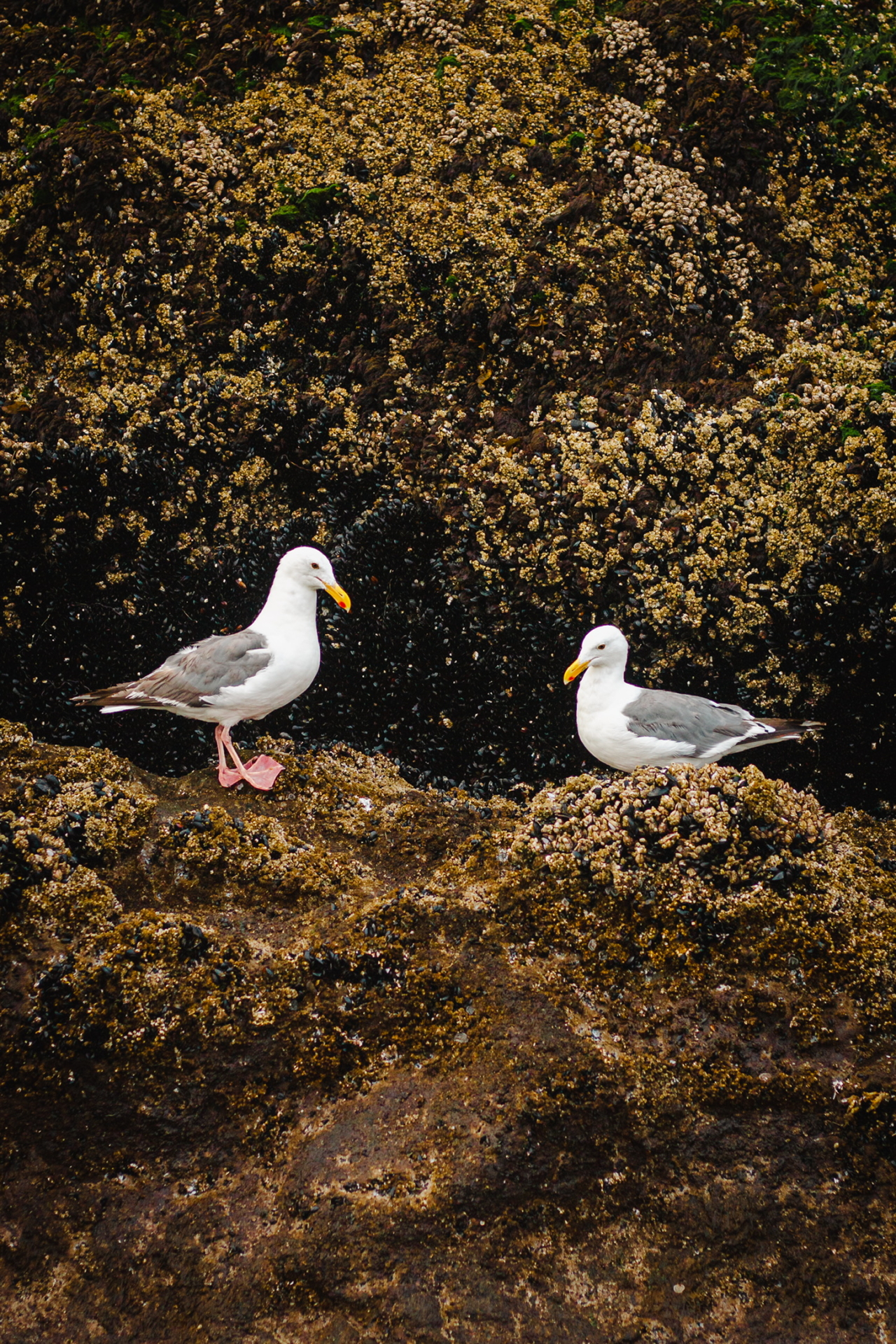
Western Gull - EA